guides
Shoulder Pain? 6 Golf Aids I Tested, $15-$200
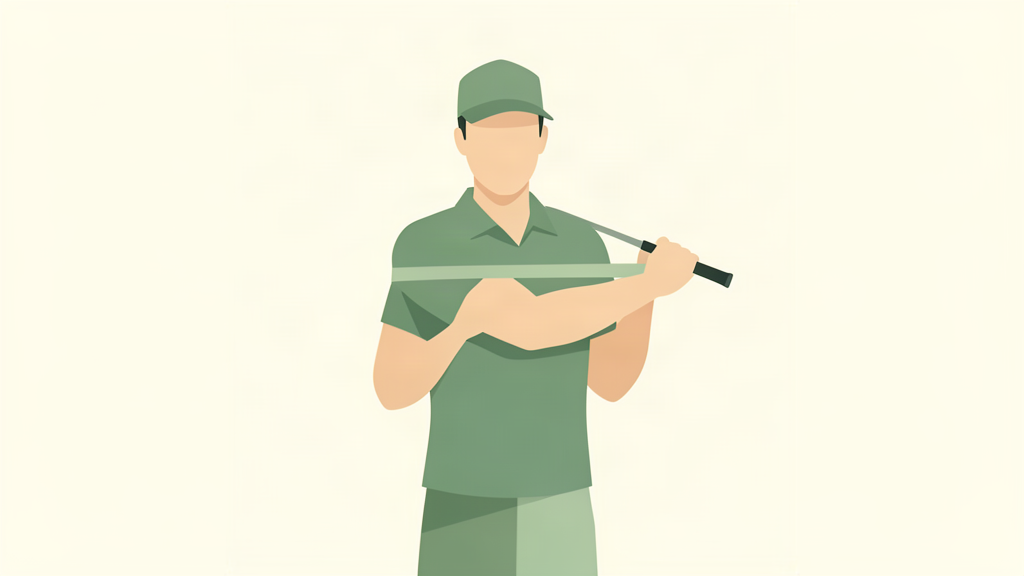
I have had three shoulder injuries in 15 years of golf. Rotator cuff impingement at 32. AC joint sprain at 38. Bursitis at 42. The first time, I stopped playing for six months and did physical therapy exercises in my living room with a theraband. The second time, I tried to play through it and made everything worse. By the third time, I had learned what actually helps and what makes it flare up. (A related trap: golfers who lose spine tilt mid-swing end up hanging weight on the lead shoulder through impact — the shoulder tilt aids guide covers the setup fixes that reduce that stress.)
The golf industry sells you performance. Speed sticks. Heavy clubs. Explosive swing trainers. For shoulder pain, those are the worst thing you can buy. They stress the exact structures you are trying to protect: the rotator cuff tendons, the AC joint capsule, the bursa that sits between your supraspinatus and your acromion.
Shoulder pain is the most common injury complaint in golf. Cleveland Clinic and Mayo Clinic dominate the search results with treatment advice: rest, ice, physical therapy, anti-inflammatories. But nobody connects that medical advice to specific training aids. “Use physical therapy exercises” is not helpful when you are standing in the golf aisle wondering which training aid will help your game without wrecking your shoulder.
This guide bridges that gap. Every product here is evaluated on one question first: “Is this gentle enough for a recovering rotator cuff?” Only after that do I ask whether it helps your golf swing.
The Rule: No Explosive Movements
If a training aid requires you to swing as hard as you can, it is out. That eliminates SuperSpeed, The Stack System, Rypstick at full resistance, and any weighted club trainer that prioritizes maximum effort. Speed training with shoulder issues is Russian roulette: you might get away with it for weeks, then one overswing pops something.
The products below all work through controlled, smooth motion. They are mobility-first, performance-second.
1. GolfForever Swing Trainer: Best Overall ($200)
The GolfForever system is built around injury prevention. Dr. Troy Van Biezen, Scottie Scheffler’s trainer, designed the programs. The training bar plus resistance bands create controlled rotational resistance without explosive movement. The app has daily 15-20 minute mobility programs.
Why it helps a shoulder: The exercises use smooth, controlled rotation with light resistance. No overhead pressing. No jerking. The app’s “pre-round activation” routines specifically target the shoulder girdle with mobility work, not strength work. The resistance band attachment point is in the middle of the bar, distributing force evenly rather than concentrating it at the shoulder joint.
What to watch for: The resistance bands can be over-tensioned. If you feel sharp pain or clicking in the front of your shoulder during rotation exercises, loosen the band. The app has no shoulder-specific injury protocol; you need to self-regulate. At $200 plus a $17/month app subscription after the first year, it is the most expensive single product here.
2. GravityFit TPro: Best for Posture and Core ($195)
The GravityFit TPro is a lightweight, portable tool that trains posture and core activation. It looks odd: a curved plastic bar that rests across your shoulders with a resistance band attached. PGA coaches use it to train the “set-up position” muscle memory that protects the rotator cuff by keeping your shoulder blades in the right position throughout the swing.
Why it helps a shoulder: Poor posture at address puts your rotator cuff in a mechanically compromised position before you even swing. The GravityFit trains scapular retraction (shoulder blades pinched back and down), which opens the subacromial space and reduces impingement risk. The resistance is light. The exercises are static holds and slow rotations. Nothing explosive.
What to watch for: It costs $195 and looks like a piece of curved plastic because that is what it is. The value is in the concept, not the materials. Amazon carries it (search “GravityFit Golf Swing Trainer”). If $195 feels steep for a posture tool, the same scapular retraction can be trained with a $15 resistance band by doing band pull-aparts. The GravityFit just makes it impossible to do wrong.
3. Orange Whip: Best Warm-Up ($120)
The Orange Whip forces smooth tempo through counterbalance. The flex creates resistance through motion, not weight. You cannot swing it hard. That is exactly what makes it safe for a recovering shoulder.
Why it helps a shoulder: The counterbalance in the grip prevents you from overswinging. The weighted orange ball at the end gives visual feedback on swing path without requiring speed. (It is one of five overswing fixes I tested; the full overswinging training aids lineup runs $47 to $149.) Swinging it five times before a round loosens the shoulder joint through its full range of motion without stressing the rotator cuff the way a weighted club would. The fluid motion is the opposite of the explosive movement that causes shoulder injuries.
What to watch for: Do not buy the Orange Whip Golden (heavier version, $149-$169). The extra weight puts more stress on the shoulder joint. Stick with the standard model at $120. At 47.5 inches, it does not fit in a standard golf bag. It gives zero data: no speed numbers, no metrics, just feel.
4. SKLZ Gold Flex: Best Budget Warm-Up ($50)
The SKLZ Gold Flex does the same thing as the Orange Whip for 40% of the price. A flexible shaft with a weighted head forces smooth tempo. It is lighter than the Orange Whip (about 1.2 pounds versus 1.75), which means even less shoulder stress during warm-up.
Why it helps a shoulder: Lighter weight means lower joint load. The flexible shaft absorbs impact at the bottom of the swing rather than transmitting it to your shoulder. Like the Orange Whip, it trains tempo through feel rather than resistance. For a golfer with an actively sore shoulder, the lighter weight is an advantage, not a compromise.
What to watch for: The stock grip is thin and uncomfortable. The shaft can develop a permanent kink if over-flexed or stored bent. There is no counterbalance weight in the grip, so the head feels heavier through the swing than it actually is. Build quality reflects the $50 price.
5. Resistance Bands and Foam Roller: Best Value ($15-$25)
A light-tension resistance band and a foam roller do more for shoulder-friendly golf fitness than most $100 training aids. Five minutes of rotator cuff external rotation exercises, band pull-aparts, and thoracic spine foam rolling every morning maintain shoulder health better than any single product.
Why it helps a shoulder: Rotator cuff physical therapy is built around light resistance band exercises. External rotation with a band directly strengthens the infraspinatus and teres minor, the two rotator cuff muscles most vulnerable to golf injuries. Thoracic spine mobility work on a foam roller addresses the stiffness that forces your shoulder to compensate during rotation.
What to watch for: Do not use heavy resistance bands. Medium or heavy bands encourage compensation with the deltoid rather than isolating the rotator cuff. The Whatafit band set with door anchor ($15-$20, Amazon ASIN B0G4Q4Z48F) is the right tension range. An Amazon Basics 18-inch foam roller ($13, ASIN B00XM2MXK8) is sufficient. Replace bands every 6-12 months.
6. TRS Slider: Best for Swing Path Without Shoulder Stress ($90)
The TRS Slider is a swing path trainer. It is a weighted puck that slides along a rail when you swing, giving instant feedback on whether your path is inside-out or over-the-top. It trains swing path without requiring speed or power.
Why it helps a shoulder: The TRS Slider requires smooth, controlled swings. You cannot use it with an aggressive, jerky motion because the puck pops off the rail. The feedback is mechanical, not speed-based. It fixes the over-the-top move that many golfers develop as compensation when their shoulder limits their backswing rotation. A restricted shoulder leads to a steep downswing; the Slider trains the opposite.
What to watch for: The rail needs a flat surface to work properly. It is best on a hitting mat or firm turf. On uneven ground, the puck binds. At $90 on Amazon (search “TRS Slider Golf Training Aid”), it is the second-most expensive product on this list for what is essentially a weighted puck on a rail. The value is in the concept and the feedback quality.
Quick Comparison
| Product | Price | Joint Stress Level | Primary Benefit | Shoulder-Specific? |
|---|---|---|---|---|
| GolfForever | $200 | Very Low | Structured mobility | Yes, injury prevention focus |
| GravityFit TPro | $195 | Very Low | Posture and core activation | Yes, reduces impingement risk |
| Orange Whip | $120 | Low | Tempo and warm-up | Indirectly, through smooth motion |
| SKLZ Gold Flex | $50 | Very Low | Budget warm-up | Indirectly, through lighter weight |
| Resistance Bands + Roller | $15-$25 | Very Low (light bands) | Rotator cuff PT | Yes, directly strengthens RC |
| TRS Slider | $90 | Very Low | Swing path training | Indirectly, fixes compensation |
What I Would Actually Buy
If your shoulder pain is mild (stiffness, occasional ache): GolfForever ($200) plus a resistance band set ($15). The structured mobility program prevents the stiffness from becoming an injury. The band gives you rotator cuff maintenance between sessions.
If your shoulder pain is moderate (sharp pain on certain moves, sore after rounds): Resistance bands ($15) plus the SKLZ Gold Flex ($50). Total: $65. Do the rotator cuff PT exercises every day for two weeks before adding anything else. The Gold Flex is your warm-up tool, not a training tool. Do not swing it more than 5-10 times before a round.
If your shoulder pain is severe (constant ache, limited range of motion): Resistance bands only ($15). See a physical therapist. These product recommendations are for golfers managing shoulder issues who have medical clearance to play. None of them replace professional medical advice.
The golf industry wants you to train harder. For shoulder pain, you need to train smarter. Lower resistance. Smoother motion. More mobility. Less ego. The products that actually help are the ones that do not feel like training at all.
Where to Buy
- GolfForever Swing Trainer at Amazon ($200)
- GravityFit TPro at Amazon ($195)
- Orange Whip Trainer at Amazon ($120)
- SKLZ Gold Flex at Amazon ($50)
- Resistance Bands Set at Amazon ($15-$20)
- Amazon Basics Foam Roller at Amazon ($13)
- TRS Slider at Amazon ($90)
Prices verified August 2026. As an Amazon Associate we earn from qualifying purchases. This article is not medical advice. Consult a physical therapist or doctor before using any training aid with an existing shoulder condition.