guides
Fix Shoulder Tilt: 5 Aids I Tested, $15-$155
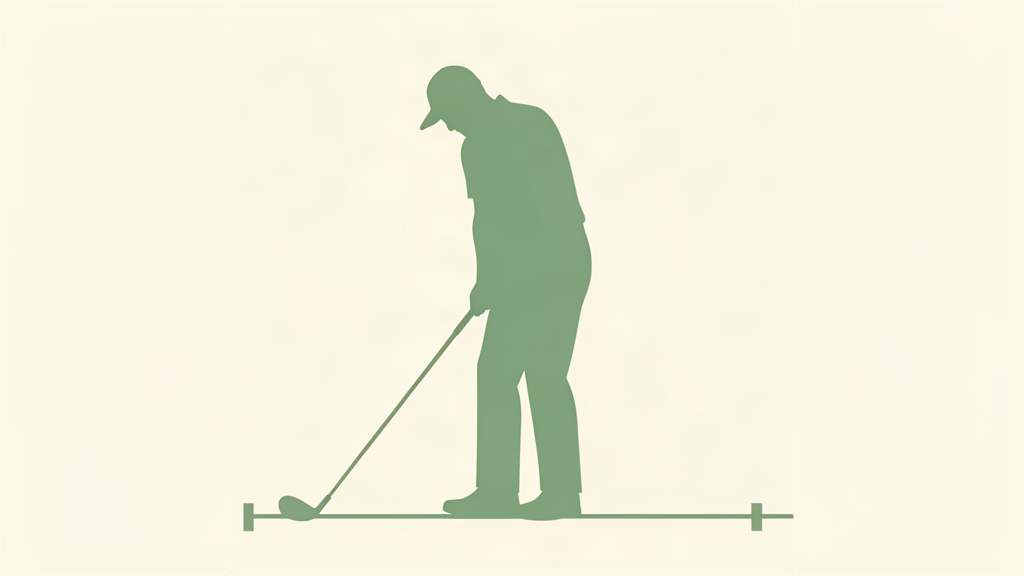
I stood in front of my bathroom mirror at 6 a.m. with a 7-iron, trying to hold secondary tilt: right shoulder lower than the left, spine tilted away from the target, weight on the trail side. I thought I had it. Then I recorded my swing at the range and watched my spine snap upright in transition like a jack-in-the-box on fast-forward. I had zero tilt at impact. Zero.
That is the shoulder tilt problem in three acts: you set up correctly, you lose it in the backswing, and by impact your spine is vertical and your arms are extended. The ball goes wherever it wants.
Five training aids keep your tilt from address to impact, from a $15 pair of sticks to a $155 resistance system. Your YouTube teacher will describe the tilt for ten minutes, then hand you nothing you can swing with.
The Setup Check You Can Do Right Now
Stand sideways to a mirror with a 7-iron at address. Your trail shoulder (right for right-handers) should be visibly lower than your lead shoulder. If they are level, you have zero tilt. Now check from behind: line up two alignment sticks pointing at your trail shoulder and lead hip. The line should angle slightly downward toward the ball. Do this check before buying anything. You may just need a mirror and ten minutes.
The Picks
1. Alignment Sticks ($15-$30): Best for Tilt Awareness at Address
Two alignment sticks stuck in the ground at specific angles give you a visual reference for shoulder tilt that a mirror alone cannot provide. Place one stick in the ground behind you angled to match your spine at address. Place the second stick horizontally across your shoulders. When your trail shoulder drops below the lead and the stick matches the ground reference, your tilt is correct.
What works: it is $15 for a pair of sticks that do about eight different things in your practice routine. For tilt specifically, it gives you a physical checkpoint you can see in your peripheral vision. You do not need to look in a mirror. You just swing.
What does not work: it does not hold your tilt for you. If your spine snaps upright in transition, the stick on the ground will remind you that you lost it, but it will not stop you from losing it. Alignment sticks are awareness tools, not resistance trainers.
Buy this if: you just need to see whether your tilt is correct. Skip if: you have the awareness but cannot hold it under speed.
2. Tour Striker Smart Ball ($47): Best Arm-Body Connection
The Smart Ball is an inflatable ball on a lanyard that hangs between your forearms. If your arms disconnect from your body during the swing, the ball drops. For shoulder tilt, this matters because arm disconnection is the number one cause of losing your spine angle. When your arms separate from your chest, your shoulders level out as compensation.
What works: it gives immediate physical feedback. If the ball drops at the top of your backswing, you know your arms separated. If it drops in transition, you know you lost your tilt. You can use it hitting real balls. After ten swings with the Smart Ball, your body learns to keep everything connected.
What does not work: it is a spherical piece of inflatable rubber. It looks like a dog toy. It squeaks. The lanyard adjustment is fiddly and takes a few tries to get the length right. At $47 it is not expensive but it is $47 for something you could approximate with a $3 playground ball and some string.
Buy this if: your arms disconnect from your chest during the swing. Skip if: your arm-body connection is fine but you still lose tilt in your lower body.
3. Tour Aim 2.0 ($70): Best Multi-Angle Reference
The Tour Aim 2.0 is a triangular alignment block that holds three sticks at precise angles. You can set one stick as an alignment line, one as a shoulder-plane reference, and one as a ball-position marker. For tilt work, the vertical stick gives you a shoulder-plane checkpoint that you can see without turning your head.
What works: it locks in three reference lines at once. Most alignment stick setups wobble or shift when you brush against them. The Tour Aim block keeps everything fixed. The vertical stick is the one that matters for tilt. Set it behind you at the angle of your spine at address and it shows you exactly when your shoulder plane changes.
What does not work: $70 for a plastic triangle with three holes in it. You can achieve 80% of the functionality with two sticks and some creative ground placement. The block is also small enough to lose in your bag. Some users report the stick holes loosening over time.
Buy this if: you want three reference lines locked in at once. Skip if: you already own alignment sticks and a mirror.
4. EyeLine Golf Mirror ($40-$60): Best for Real-Time Visual Check
The EyeLine mirror is a putting mirror repurposed for full swing. Place it on the ground to see your setup from below: shoulder alignment, spine angle, and tilt. The full-size version ($60) gives you a wider view. The small version ($40) is portable but limits what you can see.
What works: it is the only tool on this list that shows you your entire setup posture at once. Your shoulders, hips, knees, and feet all sit in one reflective surface. You can check your tilt, then swing, then check again without changing position.
What does not work: it is designed for putting, not full swing. The mirror is small. You have to position it carefully to see your shoulders. It does nothing during the swing itself. It is a setup tool only. If you set up correctly but lose tilt in transition, the mirror will not help.
Buy this if: your tilt problem is at setup, not in the swing. Skip if: you have a bathroom mirror and five minutes before your round.
5. GravityFit TPro ($155): Best for Holding Tilt Under Speed
The GravityFit TPro is a resistance band system that attaches to your body and teaches proper spinal alignment through loaded movement. A chest harness connects to a waist belt via two resistance bands. When your spine tilts correctly, the bands provide light tension. When it does not, the tension increases and you feel it immediately. PGA coaches use it. It is not a gadget. It is a posture trainer.
What works: it actively resists the movement pattern that causes you to lose tilt. When your spine snaps upright in transition, the bands pull harder. Your body learns to stay in position not because you are thinking about it but because the resistance creates a physical preference for correct posture. You can use it hitting real balls at full speed.
What does not work: $155. It looks like a posture brace from a physical therapy clinic. The bands need occasional replacement. It takes 5-10 minutes to put on correctly the first few times. Sold direct at gravityfit.com with some Amazon availability.
Buy this if: you have tried awareness drills and still lose tilt every swing. Skip if: a mirror and two alignment sticks fixed the problem.
What I Would Actually Buy
Start with alignment sticks ($15). Stand in front of a mirror. Check your tilt at address, at the top, and in a slow-motion transition. If your tilt holds at slow speed but not at full speed, add the Smart Ball ($47) for arm-body connection. If tilt is still gone at impact, the GravityFit TPro ($155) is the tool that forces it.
The budget fix: alignment sticks ($15) + bathroom mirror (free) + Smart Ball ($47) = $62.
The complete fix: Tour Aim 2.0 ($70) + GravityFit TPro ($155) = $225.
If you buy one thing, buy the alignment sticks. Half the golfers I see at the range have no idea what correct shoulder tilt looks like. The $15 pair will show you in thirty seconds.
Where to Buy
- Alignment Sticks (SuperStroke) $30 (generics from $15) at Amazon
- Tour Striker Smart Ball $47 at Amazon
- Tour Aim 2.0 ~$70 at Amazon
- EyeLine Golf Mirror $40 (small) / $60 (full-size) at Amazon
- GravityFit TPro $155 (multiple variants on Amazon; also at gravityfit.com)
I stood in my bathroom mirror at 6 a.m. holding secondary tilt for sixty seconds at a time. Two weeks later, I could hold it through a full swing. The mirror did more than any $200 training aid. But the Smart Ball made sure my arms did not undo what the mirror taught me. Tilt is simple. Keeping it under speed is not. These tools close the gap.