guides
Best Loft & Lie Measuring and Bending Tools for Home
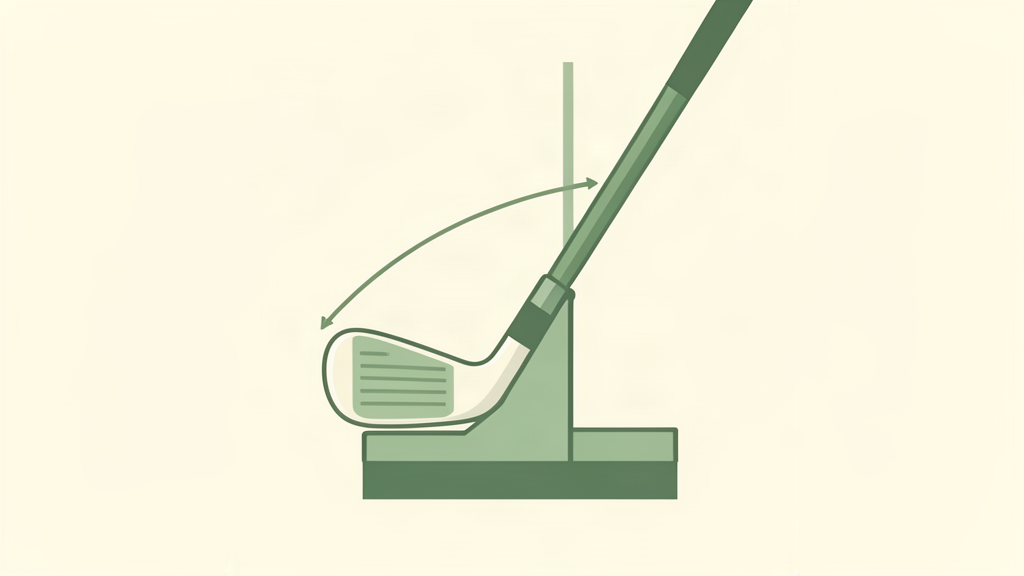
“Is it me, or is it the clubs?” Every golfer asks it. Almost nobody answers it, because the answer requires measuring loft and lie — and the golf industry would rather sell you a new iron set than a $100 gauge that tells you your 7-iron is 4 degrees off spec.
I got tired of guessing. Here is the honest map of what it costs to check — and adjust — your own specs at home, from a $60 gauge to a full bending machine.
Why Specs Drift
Irons leave the factory within a tolerance band, usually plus or minus half a degree on loft. That band widens every time you play. Turf contact flexes the hosel a fraction of a degree; cart paths, tree roots, and that one angry wedge slam do far more. Two seasons in, your “matching” irons can be two degrees apart in loft — which is the difference between a 7-iron and an 8-iron.
The symptom is a specific miss: two clubs that fly the same distance, a flier you cannot explain, or an iron that suddenly pulls. Before you buy replacements or book a $150 fitting, measure what you own. There is a decent chance the clubs are the problem.
Level One: The Digital Gauge — $60-$150
A digital loft and lie gauge is the entry point. The GolfMechanix “Green” digital gauge runs around $80-$130 depending on the source; generic equivalents sit at $60. You clamp the club, square the face, and read loft and lie off a digital arm.
What it does: tell you whether your specs are off, and by how much. That alone answers the “me or the clubs” question for most people.
What it does not do: fix anything. You will know your 6-iron is 2 degrees upright. Correcting it requires either a bending machine or a trip to a clubmaker, who typically charges $5-$8 per club. Even then, the measurement pays for itself — a shop will bend clubs you bring in with known numbers, and you can verify their work when you get home.
The learning curve is real. Face squaring is the skill: the reading shifts as you rotate the shaft, and finding true face-flat takes practice. Measure one club twenty times until your readings repeat within half a degree, then trust yourself.
Level Two: The Bending Machine — $300-$1,200
If you want to adjust specs yourself, you need a loft/lie bending machine and, non-negotiably, a gauge to verify the result.
The realistic middle of the market is used equipment. New machines from Mitchell and GolfMechanix run $500-$1,200. Used ones show up on eBay and golf-forum classifieds for $250-$450, and they do not wear out — a 15-year-old Mitchell Steelclub is as accurate as the day it was built.
What bending at home actually involves: secure the club in the machine, apply steady pressure to the hosel with a bending bar, a degree at a time, re-measure, repeat. Cast clubs (most game-improvement irons) are harder to bend than forged — some modern casts with very strong lofts warn against bending more than 2-3 degrees, and a few (certain Ping models with their adjustable hosels aside) should not be bent at all. Know your construction before you lean on the bar.
My advice after doing this for a season: buy the gauge first, live with it for a month, and only buy the machine if you find yourself driving to a clubmaker more than twice a year. The machine makes sense for tinkerers, coaching juniors, or anyone maintaining multiple sets. It does not make sense as a one-time purchase for a one-time fix.
Putters Count Too
Lie angle matters more on the putter than anywhere else, and it is the cheapest fix in golf. A putter that sits toe-up makes every putt start left of your line — golfers compensate with aim and spend years fighting it. Most shops bend a putter flat or upright for $10-$15, and a $60 gauge confirms the before and after.
The at-home check costs nothing: address a putt in your normal stance and look at the sole. Toe in the air means too upright. Heel up means too flat. If the sole sits flush and you still miss everything left, the lie is the suspect.
What I Would Actually Buy
For 90% of golfers: a $60-$80 digital gauge and a notebook. Write down loft and lie for every club you own, re-measure each spring, and pay a shop $6 a club when something drifts. Total first-year cost: about $100.
For the other 10% — the tinkerers, the guys maintaining three sets in the family — a used bending machine plus gauge at $400 all-in replaces a lifetime of shop visits. That is the math that justified mine, and the machine has already paid for itself twice over.
The middle path — buying a $1,200 new machine to fix one set once — is the one to avoid. That is not club work, that is retail therapy.
The Bottom Line
The SERP for this stuff is forum threads and $1,000+ vendor pages, with nothing in between, because the audience is small. But the underlying question — me or the clubs — is universal. For under $100 and an afternoon, you can answer it with numbers instead of hope. Most of the time, honestly, it is you. But the two degrees on your 7-iron are not helping, and now you can prove it.
Where to Buy
- Golf club loft/lie measuring gauge $60-$150 at Amazon
- Loft/lie bending machine $300-$1,200 (Mitchell and GolfMechanix sell direct; search Amazon for compatible machines)
Prices verified September 2026. As an Amazon Associate we earn from qualifying purchases.