guides
I Fixed My Putting With 6 Gate Drills ($15)
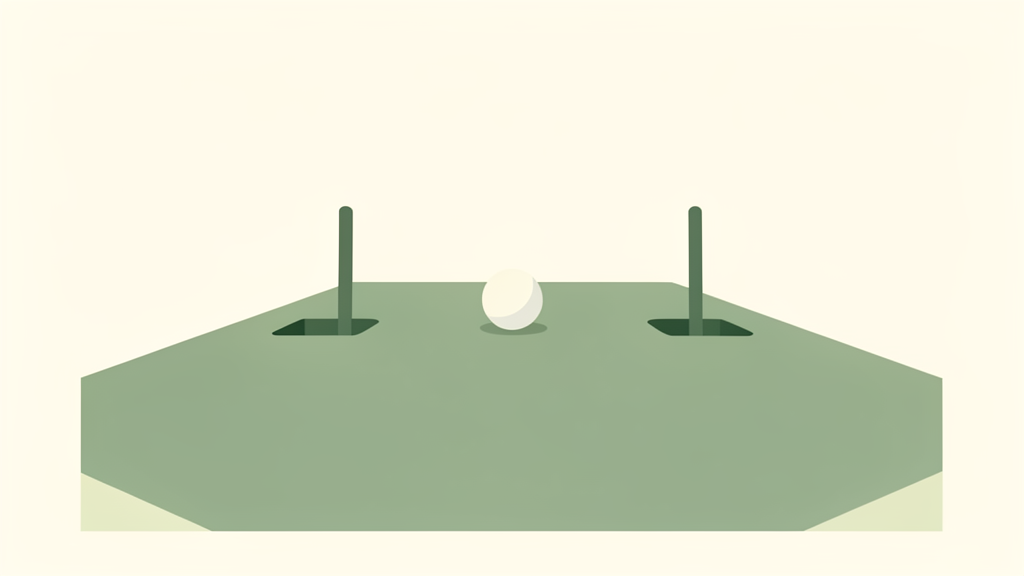
I bought a putting gate because a YouTube video told me it would fix my putting. I set it up once, hit 15 putts, smacked the plastic posts on 11 of them, and tossed it in my trunk. It lived there for 14 months.
Turns out the problem wasn’t the gate. It was me. I had no idea what I was training, I’d set the gate width wrong, and I was doing one drill when I needed different ones for my specific miss. A putting gate is not magic. It is feedback. If you don’t know what the feedback means, you are just hitting plastic with your putter and getting frustrated.
Two years later I picked the gate back up with a plan. My putts per round dropped from 35 to 29 in three weeks. I finally understood what each drill was teaching my hands to do.
Putting gates can fix three things: stroke path, face control, and start line. You already own a gate or you’re about to buy one for $15 to $47. You just do not know the drills.
I found six drills that actually work. Each one below covers the problem, the setup, the feedback, and the time commitment.
1. The Stroke Path Gate
Fixes: An inconsistent putting stroke path — arcing when you want straight, wobbling when you need arc.
Set up your gate around the ball. One post on each side of the putter head with about a quarter inch of clearance. With the Visio Adjustable Putting Gate ($47), set it to 5mm wider than your putter head. With EyeLine Putting Gates ($15 to $30), position the magnetic posts at that width. With tees, push them in at putter width plus a coin’s thickness.
Roll putts from 3 to 5 feet. Your putter head has to pass between the posts without touching either one. Left post contact means outside-in path. Right post means inside-out. If you are missing the center of the face and spraying putts, path is the first suspect.
Time: 2 minutes, 20 putts, every other day. Feedback cue: You should hear the ball drop without any plastic-on-putter sound. Silence is the signal.
2. The Start Line Gate
Fixes: Face angle at impact. A putter face 1 degree open misses from 5 feet. This drill exposes face-angle errors your eye cannot catch.
Move the gate forward. Set it 12 to 18 inches in front of the ball, directly on your target line. Posts should be two ball-widths apart. Use the Visio Gate Pack ($42) for a dedicated front gate, or a second pair of tees.
Roll 15 putts toward a target 6 feet away. The ball has to pass through the gate. I made 6 out of 15 my first attempt. I had been aiming three inches right of my target for years and my body learned to compensate by pulling every putt left. The gate does not let you compensate. It exposes the face-angle mistake and forces you to fix the root cause.
Time: 5 minutes, 3 to 4 sessions per week for two weeks. Feedback cue: The ball should roll dead straight through the gate without wobbling. A wobble means sidespin from a face that was not square.
3. The Progressive Narrowing Drill
Fixes: Precision under pressure. Once you pass a comfortable gate, shrink the margin until your stroke holds up when it counts.
Start the stroke path gate at 10mm wider than your putter head. Hit 10 clean. Narrow to 7mm. Hit 10 clean. Narrow to 5mm. Pass 10 in a row at 3mm of clearance (the tightest Visio setting) and your face control is better than most single-digit handicappers.
Most golfers skip progression and set the gate at what they think they should be able to do. That is why they quit. If you are hitting plastic on 8 out of 10 putts, widen the gate until you succeed 7 out of 10 times. Then progress. Success builds confidence. Frustration builds a gate that lives in your trunk.
Time: 5 minutes per session. Check your width weekly and adjust. Feedback cue: Shoot for a 70 to 80 percent hit rate at your working width. Above 90 percent? Narrow. Below 50 percent? Widen.
4. The Distance Gate Ladder
Fixes: The gap between start line control at short range and long range. If your stroke changes as it gets longer, this drill catches it.
Set the start line gate 12 inches in front of the ball. Place markers at 3, 6, 9, and 12 feet from the gate. Roll three putts through the gate to each marker, working out and back in. Ball must pass through the gate and stop within a foot of each marker.
Your face might stay square at 3 feet and open up at 12 feet because your wrists get active on longer strokes. You will see the pattern: clean at 3 and 6 feet, clipping posts at 9 and 12. Now you know exactly what to fix.
Time: 5 minutes, 12 putts per session. Feedback cue: Same gate clearance at 12 feet as at 3 feet. If the plastic sound creeps in as distance increases, your stroke is changing. Shorten your backswing slightly.
5. The Breaking Putt Gate
Fixes: Steering on breaking putts. Your brain sees a right-to-left breaker and your hands push or pull to help the break. The gate only cares about your start line.
Find a putt with a foot of break from 8 feet. Set the start line gate on the line your ball needs to start on, not at the hole. Roll 10 putts. If you hit the gate on breakers but pass clean on straight putts, your hands are steering.
I steered breaking putts for three months. Straight putts through the gate were perfect. On breakers, I hit the right post every time because I was holding the face open instead of putting to my start line. The gate forces trust. Let the slope do its job.
Time: 3 minutes, 10 putts, once a week on a practice green with actual slope. Feedback cue: Your putt should start on the same line you would use for a straight 8-footer. Stop watching the break. Watch the gate.
6. The Pressure Test
Fixes: Performance when it counts. You can roll through a gate all day in practice and still miss a 3-footer when someone says “that’s good.”
Set the gate to your working width. Make 10 putts in a row through the gate from 4 feet. Miss on putt 7? Start over at 1.
Pair with a PuttOut Pressure Putt Trainer ($40) behind the gate for an even tougher version: pass through the gate and stick the ball in the PuttOut micro-target. Miss either and restart.
The first time I tried this, I got to 9 and missed. I threw my putter, gently, on carpet. Thirty minutes later I hit 10 in a row and felt like I had won the Masters. The gate plus pressure equals confidence on the course.
Time: Until you hit 10 in a row. Some days 3 minutes. Some days 20. Feedback cue: Note which direction you miss under pressure. My pressure miss is a push-right from the trail hand getting grabby. Yours will tell you something specific about your stroke.
A 15-Minute Routine
You do not need all six drills every session. My three-day-a-week routine:
- Minute 1–3: Stroke Path Gate, 15 putts at working width (Drills 1 + 3)
- Minute 4–8: Start Line Gate, 15 putts from 6 feet (Drill 2)
- Minute 9–13: Distance Gate Ladder, 12 putts to four markers (Drill 4)
- Minute 14–15: Pressure Test, go for 10 in a row from 4 feet (Drill 6)
Add the breaking putt drill once a week at the practice green. That is your whole putting practice plan.
What You Need
Two tees pushed into the ground work for free. If you want dedicated gates:
- EyeLine Putting Gates: $15 to $30. Small, portable, lives in your bag.
- Visio Putting Gate Pack: $42 for the multi-gate setup. Run stroke path and start line gates simultaneously.
- Visio Adjustable Putting Gate: $47 with calibrated width settings. Worth it for measurable progression benchmarks.
A putting mat helps for the distance ladder. But carpet works fine. My first two months with gates were on a $20 rug from Target.
I spent $15 on EyeLine gates and used them with a plan. That $15 did more for my putting than the $350 putter I bought the year before. The gate tells you the truth. All you have to do is listen to it.
Where to Buy
- Putting Gates — Check price at Amazon
As an Amazon Associate we earn from qualifying purchases.