guides
Stop Skulling Flop Shots: 4 Aids I Tested, $15-$60
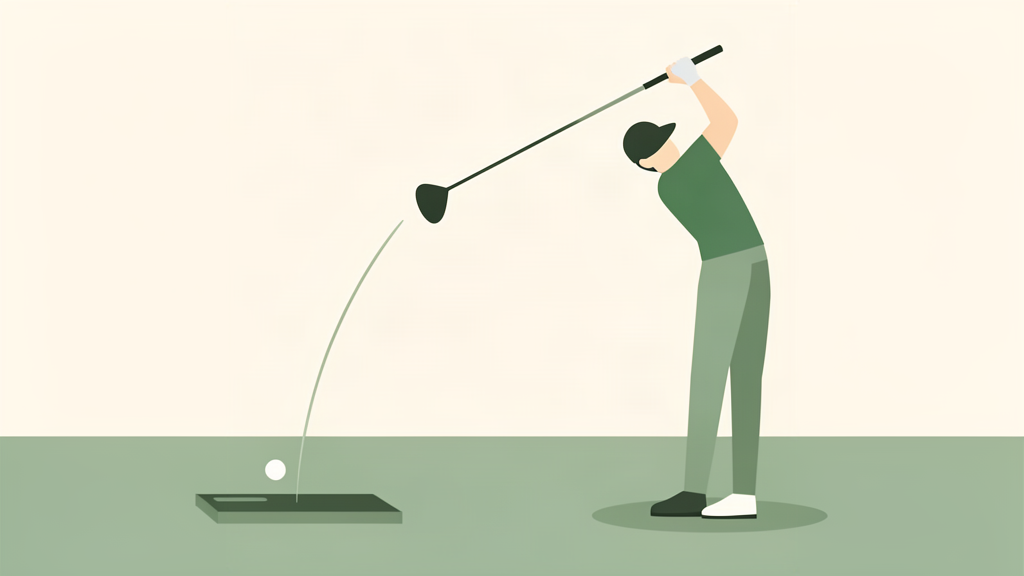
Last summer I bladed a flop shot over a green, over a cart path, and into an open-top dumpster behind the 14th hole. A perfect, high-flying 45-yard skull. My playing partner did not say a word. He just handed me a ball retriever I do not own.
That was my flop shot in one sentence. The face was never the problem. I had watched every “how to hit a flop shot” video on YouTube, same as the rest of the mid-handicap world, opened the face exactly like they told me, and still bladed half of them 40 yards long. What fixed it was four training aids that drill the part every tutorial skips, and they cost about $140 total, less than a single lesson with a club pro.
Everyone Teaches the Flop Backwards
The low point decides whether you hit a flop or skull it. The shot has two moving parts: an open face and a low point that bottoms out in front of the ball, and every tutorial spends 90% of its time on the face. The face is table stakes. It is the low point you have to get right.
You skull a flop when the clubhead passes the handle before impact. You flip your wrists or slow down through the ball, the low point ends up behind the ball, the leading edge catches the equator, and the ball rockets out thin and low. The face gets you height. The low point gets you a ball instead of a skull. Everyone forgets the second half.
The classic Phil Mickelson flop-shot method is open the face, re-grip, and swing along your stance line. Sound, but it skips the part where you quit on the swing, where the rest of us fall apart.
Why Your Flop Shot Is Bad
You decelerate into the ball. You take the club back too far, realize it, and quit on the downswing. The club bottoms out early, the face closes, and the leading edge clips the middle of the ball. This is almost always the reason for a skull.
Your weight hangs back. A flop needs your weight moving onto your front foot through impact so the low point sits ahead of the ball. When your weight stays back, your low point sits behind it, and you hit the turf first or blade it clean.
Your wrists flip at the bottom. You try to “help” the ball up at the last second by scooping. The handle slows, the clubhead races ahead of your hands, and the loft you set at address is gone by the time the club reaches the ball.
Your ball position is a guess. Too far forward and you catch it on the upswing with a closed face. Too far back and you hit the ground before the ball. You need a repeatable reference point, not a feel.
You cannot fix this by reading about it. You need feedback that tells you when your wrists, low point, or ball position drift. That is where the training aids earn their keep.
The Aids That Fixed My Flop Shot
1. WhyGolf Chipping Plate: $40 to $60
The WhyGolf Chipping Plate is a thin board you stand on while you chip, with markings that force your ball position and stance width into the right spot. Most of us set up to a flop the same way we set up to a seven iron, and that is the problem.
For a flop you want a slightly wider stance, your weight preset onto the front foot, and the ball just forward of center. The plate’s markings give you that same position every single time. You stop guessing.
The drill: Set up on the plate with your 60-degree, ball on the forward marker, weight on your lead foot. Hit 10 short flop swings without a ball, making sure you feel the club bottom out after the ball marker, not before it. Then hit 10 real balls into a target.
Time commitment: 5 minutes a day for two weeks. The setup repetition is the whole point.
What it fixed: My ball position and low point. I had been playing the flop off my front toe with my weight back, which guaranteed a skull the moment I slowed down.
2. Tour Striker Smart Ball: $40 to $45
The Smart Ball is an inflatable ball on a lanyard that sits between your forearms. When your arms connect to your torso through the swing, the ball stays put. The second your wrists flip and the clubhead races past your hands, the ball drops. Instant feedback on the exact fault that causes skulls.
The flop rotates your forearms open at address, which makes staying connected harder and flipping more tempting. The Smart Ball stops you from scooping because you physically cannot flip your wrists while the ball is pinched between your arms.
The drill: Inflate the ball, pinch it between your forearms, and hit 10 half-acceleration flop swings from 15 yards. If the ball drops on the follow-through, you flipped. Do not chase distance. Just keep the ball in place through impact.
Time commitment: 10 minutes, three times a week for two weeks.
What it fixed: The clubhead passing the handle. This was my single biggest problem. Once my hands stopped passing the ball, the leading edge stopped finding the equator.
3. Alignment Sticks: $15 to $20
Alignment sticks do two jobs for a flop. First, they hold your open-face setup honest. Second, they force the steep, accelerating path a flop needs.
For the face, lay one stick down your stance line, open your stance to it, then open the face more. Most amateurs open their stance but forget the face, or open the face but aim their body at the target. A stick gives you a physical line to check both against.
For the path, stand a stick up just behind and outside your ball. You want to swing steep enough to miss it on the downswing while still accelerating. Clip the stick early and you are too shallow or too fast from the top.
The drill: Set one stick on the ground for stance, one angled for a steep path. Hit 12 flops into the net. Before each one, check your face is open to the stance line, not the ball.
Time commitment: 10 minutes, twice a week for two weeks, layered on top of the plate work.
What it fixed: My open face and my attack angle. A flop needs a steeper swing than a chip, and the stick gave me something to miss and something to measure.
4. Chipping Net: $40 to $60
A chipping net sounds like the least flop-specific tool on the list, but it solves the part no drill touches: trust. You blade flops partly because you do not believe the ball will get there with a soft, open face, so you swing harder and decelerate.
The net demands a high, soft landing. A flop that lands like a rock does not stop. To land the ball in the net from 10 yards and have it stay, it has to drop steep and soft, which is the whole point of the shot.
The drill: Set the net 10 yards out. Hit 15 flops, tracking how many land and stay in the target. Then move back to 15 yards. Chasing a score forces you to commit to the soft swing instead of bailing out.
Time commitment: 10 minutes, three times a week for three weeks.
What it fixed: My confidence through impact. Once I trusted the open face to land the ball soft, I stopped decelerating, and the skulls stopped showing up.
The Three-Week Plan
Week one: Chipping Plate every day for 5 minutes. Lock in your ball position and forward weight. Add the Smart Ball three times to kill the flip.
Week two: Keep the plate and the Smart Ball. Add alignment sticks twice a week for face and path. Your contact should feel cleaner by now.
Week three: Add the chipping net three times for soft-landing targets. Bring it all together: set up on the plate, check the face on the stick, keep the arms connected, and land it soft.
By week three my skull rate went from half my flops to maybe one in fifteen, and my misses now land short and fat instead of thin and dangerous.
What I Would Skip
Do not buy the PuttOut AirBreak for your flop shot. It is a fantastic $340 putting mat that simulates breaking putts, and I love mine for that. But it has nothing to do with flop shots. Anyone selling you a “breaking-lie flop trainer” is selling you a putting aid with new marketing. Save the money.
Where to Buy
- WhyGolf Chipping Plate: $40-$60 at Amazon
- Tour Striker Smart Ball: $40-$45 at Amazon
- SuperStroke Alignment Sticks: $15-$20 at Amazon
- Golf Chipping Net: $40-$60 at Amazon
Prices checked September 2026. As an Amazon Associate we earn from qualifying purchases.