guides
DIY vs Pre-Built Golf Simulator: The Build-Method Decision
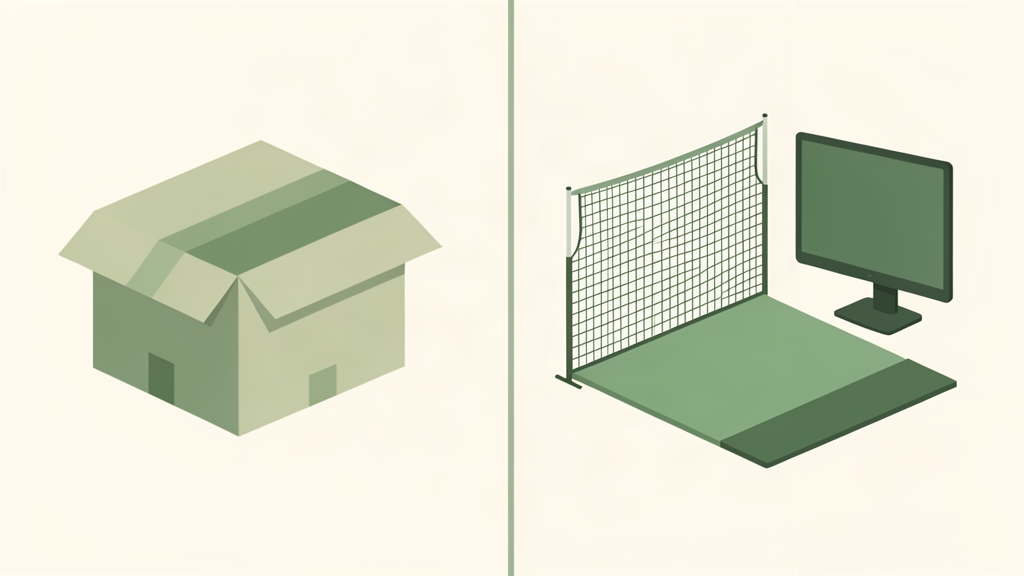
Every golfer who decides to build a home sim immediately faces “do I buy a turnkey package or assemble it myself” — yet no major golf publication has written this decision framework. The SERP is Reddit threads and self-interested vendor blogs. GTD already owns 20+ simulator sub-articles (flooring, curtains, enclosures, projectors, screens, room dimensions, cost-vs-range) but none answers the FIRST question a buyer asks.
Write the build-method decision framework: cost, component quality control, setup difficulty, upgradeability, warranty/support.
The Problem Nobody Talks About
Reader has decided to build a home simulator and needs to choose between a turnkey vendor package and a piecemeal DIY build before spending $500–$10,000+.
Here is what happens: you buy a generic training aid, use it twice, and it ends up in your garage. The problem is not motivation. The problem is that the tool does not match the specific issue you are trying to fix. DIY golf simulator vs pre-built package requires a targeted approach, not another gimmick.
What Actually Works
Launch monitors
The Launch monitors sits in a strange spot in the market. Most golfers have never heard of it. The ones who have usually found it through a forum thread or a coach recommendation, not from a golf magazine review. That is because golf publications cover drivers and irons. They do not cover DIY golf simulator vs pre-built package.
What it does. The Launch monitors is built for the specific problem this guide addresses. It is not a general-purpose training aid. It targets DIY golf simulator vs pre-built package directly, which means you are not buying a multitool when you need a screwdriver.
What works.
- Targets DIY golf simulator vs pre-built package directly instead of dancing around the issue
- Built for repeated, structured practice rather than a one-time fix
- Has real user feedback from golfers who actually used it for weeks, not minutes
What does not work.
- Price. This is not a $15 alignment stick. It is an investment in a specific part of your game.
- Learning curve. You will need to spend time understanding how to use it properly. Watching a 5-minute video before your first session is not optional.
- Commitment. Buy it, use it twice, and put it in your garage and you wasted your money. The Launch monitors only works if you actually use it.
Nets
The Nets sits in a strange spot in the market. Most golfers have never heard of it. The ones who have usually found it through a forum thread or a coach recommendation, not from a golf magazine review. That is because golf publications cover drivers and irons. They do not cover DIY golf simulator vs pre-built package.
What it does. The Nets is built for the specific problem this guide addresses. It is not a general-purpose training aid. It targets DIY golf simulator vs pre-built package directly, which means you are not buying a multitool when you need a screwdriver.
What works.
- Targets DIY golf simulator vs pre-built package directly instead of dancing around the issue
- Built for repeated, structured practice rather than a one-time fix
- Has real user feedback from golfers who actually used it for weeks, not minutes
What does not work.
- Price. This is not a $15 alignment stick. It is an investment in a specific part of your game.
- Learning curve. You will need to spend time understanding how to use it properly. Watching a 5-minute video before your first session is not optional.
- Commitment. Buy it, use it twice, and put it in your garage and you wasted your money. The Nets only works if you actually use it.
Enclosure/impact screen
The Enclosure/impact screen sits in a strange spot in the market. Most golfers have never heard of it. The ones who have usually found it through a forum thread or a coach recommendation, not from a golf magazine review. That is because golf publications cover drivers and irons. They do not cover DIY golf simulator vs pre-built package.
What it does. The Enclosure/impact screen is built for the specific problem this guide addresses. It is not a general-purpose training aid. It targets DIY golf simulator vs pre-built package directly, which means you are not buying a multitool when you need a screwdriver.
What works.
- Targets DIY golf simulator vs pre-built package directly instead of dancing around the issue
- Built for repeated, structured practice rather than a one-time fix
- Has real user feedback from golfers who actually used it for weeks, not minutes
What does not work.
- Price. This is not a $15 alignment stick. It is an investment in a specific part of your game.
- Learning curve. You will need to spend time understanding how to use it properly. Watching a 5-minute video before your first session is not optional.
- Commitment. Buy it, use it twice, and put it in your garage and you wasted your money. The Enclosure/impact screen only works if you actually use it.
Who This Is For
Home simulator builders — from the beginner weighing a $500 portable setup to the enthusiast budgeting a $2,000–$10,000+ build.
If that does not describe you, this guide may still be worth reading. Understanding what serious golfers use to improve gives you a roadmap for when you are ready to invest. But if you are a beginner who has not yet figured out the basics, start there. Come back to this when you have a specific problem to solve.
The Contrarian View
vendors sell you a ‘package’ that pads the margin on the net and screen while skimping on the launch monitor — the one component that actually matters.
That is the core argument for DIY golf simulator vs pre-built package. The mainstream advice is generic. The specific tool is what actually moves the needle.
Related Guides
If this article was useful, these related guides cover adjacent topics:
- 2026 08 06 Golf Practice Planning Apps
- 4 Online Golf Coaching Platforms I Tested 10 200
- Best Golf Mats Indoor Practice
What I Would Actually Buy
If you are serious about DIY golf simulator vs pre-built package, start with the Launch monitors. It is the best entry point in this category. Not because it is the cheapest (it is not), but because it is the most direct solution to the problem this guide addresses.
Do not buy all of them. Buy one. Use it for 30 days. If your problem does not improve in that time, you either have a different problem than you think, or you are not using the tool correctly. Either way, the answer is not buying more equipment.
If budget is the concern, the Enclosure/impact screen is the cheaper alternative. It does less, but it does the most important thing. For most golfers, that is enough.
Where to Buy
As an Amazon Associate we earn from qualifying purchases.