guides
Best Putting Aids 2026: Fix Your Actual Miss
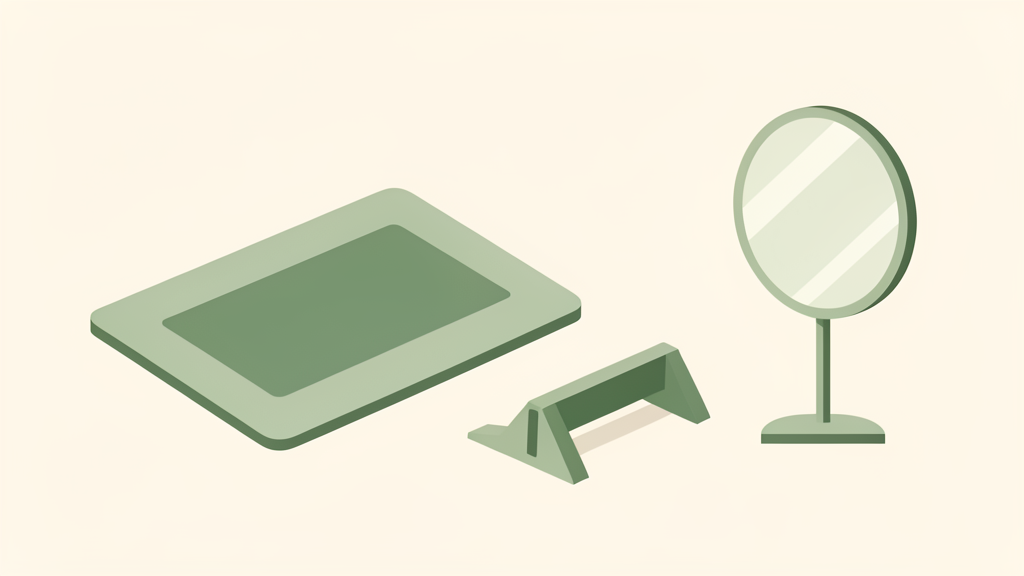
I have bought four putting aids in the last three years. Two of them are in my garage right now, covered in dust. One of them is a $200 putting mat that rolls at 11 on the stimp while my local muni greens run at 8. I practiced on it all winter and showed up in April leaving every putt six feet short.
The problem was not the mat. The problem was I bought it for the wrong reason. I do not need break practice. I need pace control from inside eight feet. A $30 PuttOut would have done the job. I bought the wrong tool because I did not actually know what my putting miss was.
Most golfers do the same thing. They buy a putting aid, use it for two weeks, putt the same, and blame the product. But they never diagnosed the actual problem. Each section below starts with the miss, then gives you the fix and the best tool for it.
Miss 1: You Pull or Push Short Putts
The Problem
You line up a three-footer. It looks dead straight. You miss left. Or right. You have no idea why.
Your eyes are aimed wrong. As you age, your posture changes and your eye position drifts. You think you are looking straight down at the ball. Your eyes are actually two inches inside the target line. That means the putter face you see as square is actually aimed left. You miss. Every time. If your three-foot miss is a straight pull or push rather than a read problem, the pulling or pushing putts breakdown prices a $30-75 fix for each direction.
The Fix: EyeLine Putting Alignment Mirror ($36)
This is a small acrylic mirror with alignment lines for your eyes, shoulders, and putter face. You stand over it, look down, and immediately see where your eyes actually are. You cannot un-see it once you spot the problem. The mirror also has built-in gate slots for tee gate drills. 2,600 Amazon reviews at 4.5 stars. Rory McIlroy uses one. Five minutes of mirror work before your round and your three-footers stop being a coin flip.
Skip: The KINGTOP knockoff ($15). The gate slots are sometimes misaligned. A crooked gate teaches a crooked stroke.
Also worth a look: The Visio Putting Mirror ($32) is $4 less but lacks built-in gate slots. Good if money is tight. The EyeLine gates are worth the extra $4.
Miss 2: Your Stroke Path Wobbles
The Problem
You make solid contact. Your pace feels right. But the ball starts left or right of your intended line and you cannot figure out why.
Your putter is not tracking on a straight line or a consistent arc. The putter head wobbles slightly off-path during the backswing. You compensate by manipulating the face through impact. Sometimes it works. Sometimes it does not. That inconsistency shows up as missed putts you cannot explain.
The Fix: Visio Adjustable Putting Gate ($47)
Two adjustable gates that sit on the ground. You place your ball between them with just enough room for your putter to pass through. Hit the gate and you know your stroke path is off. The gates are adjustable so you can make the gap wider when you are learning and narrower as you improve. Phil Kenyon, one of the best putting coaches on tour, uses these with his students.
Why not a mirror for this? A mirror shows you where your eyes are aimed. A gate shows you where your putter is going. They fix different problems. If your three-footers miss left or right but feel like solid contact, you need a gate.
Also worth a look: The EyeLine Putting Rail ($50-$70) is a curved metal track that guides your putter through the stroke. More expensive than the Visio gate but gives you more structure. Good for golfers who want a physical guide rather than a penalty for failure. The full lineup of physical-path tools is ranked in the putting stroke trainers guide.
Miss 3: You Leave Everything Short (Or Blast It Past)
The Problem
Your first putt from 20 feet finishes five feet short. Or seven feet past. Your distance control is all over the place and it is costing you three strokes a round in wasted putts.
This is the most common putting problem in amateur golf. It is also the easiest to fix. You do not need a fancy mat or a launch monitor. You need pace feedback.
The Fix: PuttOut Pressure Putt Trainer ($30)
This is a raised plastic ramp that sits on the ground. Hit your putt with good pace and the ball rides up the ramp and settles into a small depression. Hit it too soft and it rolls back to you. Hit it too hard and it bounces off. The sweet spot is exactly the speed that would roll 12 to 18 inches past the hole on a real green. That is the ideal pace for making putts.
It is $30. It fits in your golf bag. It works on any flat surface. Use it for five minutes every morning and your pace control sharpens up in two weeks. I dropped from 36 putts per round to 31 in about a month using this and the EyeLine mirror together. Total cost: $66.
Skip: The PuttOut AirBreak ($340-$400). It simulates breaking putts with adjustable air pumps and is genuinely brilliant. But most amateurs do not need break practice. They need pace practice and start-line practice. The $30 Pressure Putt Trainer handles 90% of your putting problems. The AirBreak handles the last 10%.
Miss 4: You Do Not Have a Place to Practice
The Problem
You want to practice your putting. You have five minutes a day. But you do not have a putting mat, your carpet is too fast, and your hardwood floors are too slick. You end up not practicing at all.
A putting mat is not a training aid. It is infrastructure. You need one before any of the other tools on this list make sense. This is the best one for most people.
The Fix: Wellputt 10ft Start 2.0 ($89)
The Wellputt is the most complete putting mat you can buy for under $100. It has two sides: an accuracy side that rolls at about 10 on the stimp and a distance-control side at about 11.5. The “Good Zone / Bad Zone” markings behind the hole teach pace. If your ball stops in the Good Zone, your pace was right. Short of the hole is the Bad Zone. It also has alignment marks for putter face and eye position.
The mat pairs with Wellputt’s app, which has 50-plus drills designed by Cameron McCormick. The drills are structured. You are not just rolling putts. You are following a plan.
What to know before buying: The ends of the mat curl slightly out of the box but flatten after a few days. The mat runs slightly faster than advertised. No ball return. No guardrails on the sides. For $89, you are paying for the training system, not premium materials.
Also worth a look:
- Perfect Practice Compact 8’ ($110) has an auto ball return. That feature alone is worth it if you have a bad back and bending over 50 times per session is a problem.
- PuttOut Mat 8ft ($60) is the budget option. Thin mat, decent roll, pairs perfectly with the Pressure Putt Trainer. The mat can develop a groove from repeated use.
- BirdieBall Green ($27 for a 2’x10’ strip) is foam, not turf. It feels weird at first but it is the only mat that works outdoors on a patio or deck. Modular design means you can add length later.
Miss 5: You Want Data, Not Feel
The Problem
You have fixed your alignment. Your stroke path is consistent. Your pace control is decent. But you still miss putts that feel right and you want to know what is actually happening at impact. Is the face closing? Are you adding loft? Your eye cannot see a two-degree face angle change. A sensor can.
The Fix: Blast Golf Swing & Stroke Analyzer ($150)
A tiny sensor that clips to the butt of your putter grip. It measures face angle at impact, backstroke rotation, forward stroke rotation, tempo, stroke length, and loft change. The putting data is the best part of this device. It will tell you that your face is 1.8 degrees open at impact on every left-to-right putt. You cannot feel that. Now you can fix it.
The smart video capture auto-clips every putt and overlays the metrics on the video. You can scrub through frame by frame and see exactly what your putter is doing at the moment the face angle changes.
The catch: You get one month of full features free, then basic metrics are limited to 10 swings per day. Full access costs $74.90 per year. The full-swing speed data on this sensor is unreliable, especially on Android. But the putting data is excellent. If you buy this, use it for putting and ignore the full-swing numbers.
Verdict: Worth it if you are hyper-analytical about your putting stroke and want face angle data no mirror or gate can give you. Skip if you are happy with visual feedback.
One more thing: the Blast also tracks your putting tempo. That ratio of backstroke time to forward stroke time is a real thing tour pros work on. A 2:1 ratio is the target. If your tempo is 3:1 or 1.5:1, the Blast will catch it. It is one more data point that visual feedback alone cannot give you.
What I Would Actually Buy
If you only buy one thing, get the PuttOut Pressure Putt Trainer ($30). It fixes the most common putting problem in golf and it costs less than a sleeve of Pro V1s.
The $66 system: EyeLine Putting Mirror ($36) plus PuttOut Pressure Putt Trainer ($30). Alignment plus pace control. This combination covers 90% of amateur putting problems for less than the cost of one round of golf.
The full setup ($155): Mirror ($36), PuttOut ($30), and Wellputt 10ft Start 2.0 ($89). Now you have a practice surface, pace feedback, and alignment feedback. You can do structured 10-minute putting sessions every morning without leaving your house.
Do not buy the Blast Golf sensor unless you have already done the mirror and PuttOut for a month and still cannot figure out your miss. Data without fundamentals is just noise.
Where to Buy
- PuttOut Pressure Putt Trainer $30 at Amazon
- EyeLine Putting Alignment Mirror (Small) $36 at Amazon
- Visio Adjustable Putting Gate $47 at Amazon
- Wellputt 10ft Start 2.0 $89 at Amazon
- Blast Golf Sensor $149.95 at Amazon
Golf Training Daily is reader-supported. When you buy through links on our site, we may earn an affiliate commission at no extra cost to you.